When most people think of islands, they imagine sunshine, warm waves, and carefree escape. But some islands are not like that. Some are cold, wild, isolated, and weathered by storms. Instead of bright beach towels and sandcastles, they have lonely lighthouses, forgotten cemeteries, abandoned harbors, ruined forts, and shores that have seen too much tragedy.
These islands breed madness and mystery. They have dark histories and darker stories, with tales of imprisonment, shipwrecks, vanishings, ghostly legends, and even murder.
This post is about those darker islands.
And if you’re brave enough to chase that trapped-on-a-remote-murder-island feeling straight out of Agatha Christie’s And Then There Were None, most of them are even visitable with a little planning.
Come closer. I’m about to tell you their scary little secrets.
Smuttynose Island, Maine/New Hampshire
The true-crime island
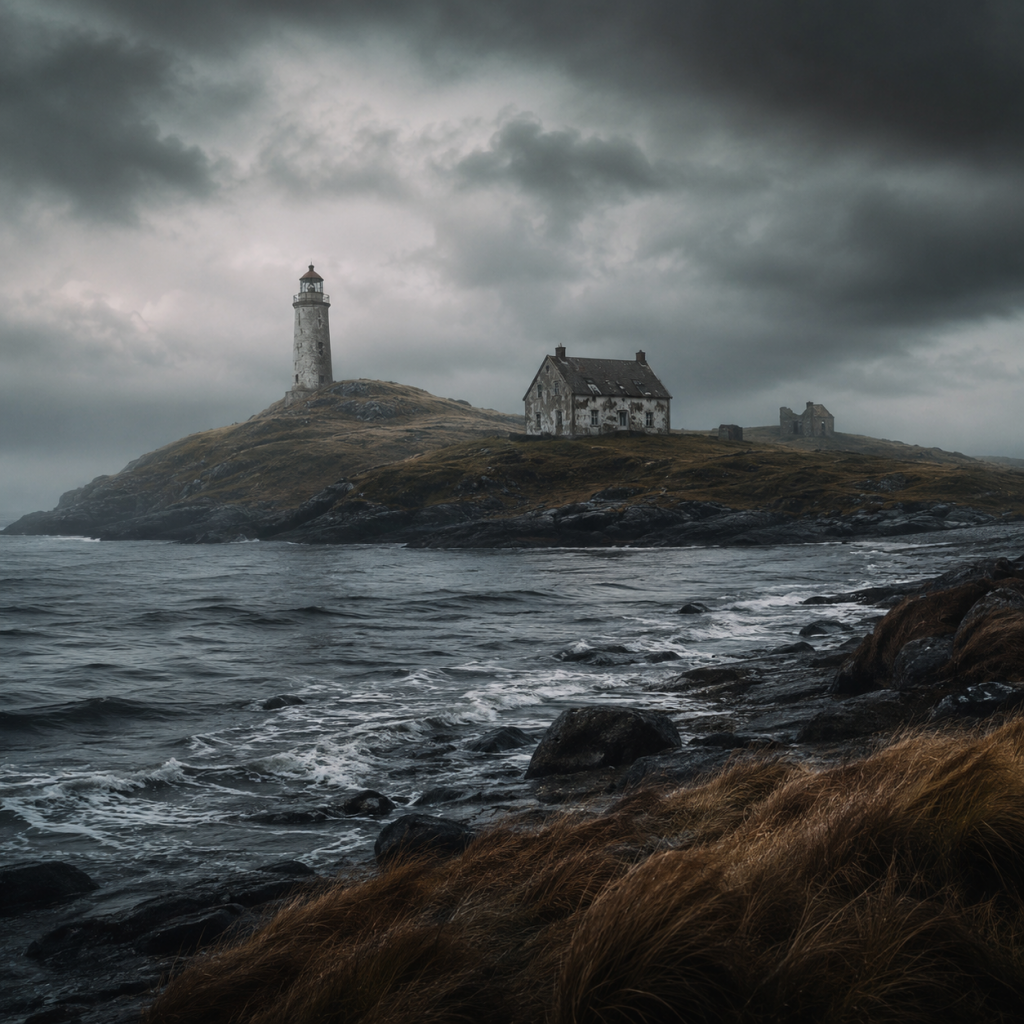
Smuttynose Island feels almost too perfectly arranged for a grim New England murder story: a small, wind-battered island in the Isles of Shoals, a few isolated households, and the dark Atlantic pressing in from every side. Its history is long, but one event still overshadows the rest. In 1873, two Norwegian women, Karen Christensen and Anethe Christensen, were murdered on the island in a case that became one of New England’s most infamous true crime stories. Louis Wagner, a German-born fisherman who had once worked for the victims’ family and boarded in their home, was identified by survivor Maren Hontvet, convicted of the murders, and later hanged, though the case has continued to inspire questions, retellings, and alternate theories. The Isles of Shoals Historical and Research Association notes that Smuttynose history is still dominated by the 1873 ax murders, which have inspired books and the film The Weight of Water, based on Anita Shreve’s novel.
The story has all the elements of a locked-island nightmare: a remote setting, a tiny cast of people, a violent intruder, a survivor, and a long afterlife of theories, retellings, and ghostly atmosphere. Even today, Smuttynose does not feel like a normal destination.
Can you visit?
Yes. Check into chartering a boat or tour from the nearby mainland. Historic sites on the island include the Samuel Haley House, the site of the Red House connected to the 1873 murders, old cellar holes, stone walls, the Mid-Ocean House site, the family cemetery, and walking paths across the island.
Wood Island, Maine
The lighthouse murder-suicide island
Wood Island, near Biddeford Pool, has the lonely beauty of a classic Maine lighthouse setting, but its best-known dark story is rooted in real violence. In 1896, an intoxicated man named Howard Hobbs shot and killed Frederick W. Milliken after a dispute on the island. Realizing what he had done, Hobbs reportedly ran to lighthouse keeper Thomas Henry Orcutt and asked for help. Orcutt refused to hide him and told him to turn himself in. Instead, Hobbs returned to his nearby shack and took his own life.
The haunting stories that followed are exactly the kind that cling to lighthouse islands. Visitors, volunteers, and paranormal investigators have reported footsteps, creaking doors, whispered conversations, shadowy figures near the spiral staircase, and strange movement inside the lighthouse when it should be empty. Some ghost hunters have even claimed to hear a remorseful voice whispering, “I didn’t mean to do it,” tying the island’s eerie reputation back to the violence that started it.
Other stories add to the feeling that Wood Island has never fully settled. Some visitors have reported seeing the ghost of the murdered man, while others describe a woman, sometimes believed to be Hobbs’s wife, walking along the seawall. Whether visitors come for the maritime history, the restoration work, or the ghost lore, Wood Island has that unsettling combination of beauty and dread. Once you know the story, the lighthouse feels less picturesque and more watchful.
Can you visit?
Yes, seasonally. Friends of Wood Island Lighthouse offers guided tours in July and August, with reservations required. Tours depart by boat from Biddeford Pool and include the island grounds, keeper’s house, and lighthouse tower when conditions allow.
🔦👻 Download the Free Haunted America Explorer Bundle!
Six free printable downloads, including a haunted America map, locations guide, checklist, and more to help you explore America’s eeriest places.
👻 Win an Eerie Escapes Box
Enter the monthly giveaway for a chance to win a curated box of travel-inspired and spooky finds.
Execution Rocks, New York
The gruesome legend island
Execution Rocks sounds like something invented for a gothic novel, but the name belongs to a real lighthouse island in Long Island Sound. The legend behind it is horrifying: during the Revolutionary War era, prisoners were supposedly chained to the rocks at low tide and left to drown as the water rose. The Cow Neck Peninsula Historical Society describes the story as legend, noting that different versions involve British soldiers, prisoners, enslaved people, or criminals, but all lead back to the same image: a person trapped on the rocks while the tide slowly climbs.
The island itself is tiny and stark, with a lighthouse rising from the water like a warning. Even if the most gruesome version of the story remains unproven, the legend has done its work. Execution Rocks feels like a place named by fear, tide, and punishment. It is one of the most visually chilling entries on this list, not because there is much to do there, but because there is almost nothing to distract from the name and the story.
Can you visit?
Yes, but access is limited and specialized. Check current tour or special-access options before planning around it.
Georges Island, Massachusetts
The prison-fort ghost story island
Georges Island is easier to reach than some islands on this list, but once you step into Fort Warren, the mood changes. The island is home to the Civil War-era fort, a massive granite stronghold in Boston Harbor. Fort Warren was used as a prison for Confederate officers and government officials during the Civil War, and its stone corridors, dark archways, and enclosed parade grounds give the island a naturally haunted atmosphere.
Its famous ghost story is the Lady in Black. According to the legend, she was the wife of a Confederate prisoner who disguised herself in men’s clothing and tried to help him escape. The plan failed, her husband was killed, and she was later executed, supposedly in black robes made from whatever cloth could be found. The story is now part of Fort Warren’s own visitor lore, and the Boston Harbor Islands National and State Park has even hosted “Legend of the Lady in Black” programming, inviting visitors to hear the tale at the fort’s dark arched passageways.
Can you visit?
Yes, with seasonal ferry access, fort exploration, walking paths, and visitor facilities. It is not remote in the wilderness sense, but the fort gives it a wonderfully contained, eerie, locked-in feeling.
Two Harbors, Catalina Island, California
The Hollywood mystery island
In 1981, Natalie Wood, a famous American actress, was aboard the yacht Splendour near Catalina Island with Robert Wagner, Christopher Walken, and the boat’s captain when she disappeared into the water. Her body was later found off the island, and although her death was initially ruled an accidental drowning, the case never fully settled. Decades later, investigators reopened the case, and Wood’s death certificate was amended to “drowning and other undetermined factors.”
The mystery is especially tied to the Two Harbors side of Catalina Island. While the other side of the island, Avalon, is glamorous and vacationy, Two Harbors is different. It is smaller, quieter, and more isolated, shaped by irregular boat schedules, shifting weather, and the dark Pacific just beyond the harbor. The group reportedly spent time at Harbor Reef in Two Harbors before returning to the yacht that night, and later reporting has described how the unanswered questions around Wood’s death still linger there.
That rustic island-village feeling gives this side of Catalina a darker mood. It makes the story feel less like distant Hollywood history and more like something shaped by dark water, foggy memory, and a coastline that still seems to be keeping its secrets.
Can you visit?
Yes. Two Harbors is reachable by ferry and boat, and it is much more visitor-friendly than Smuttynose or Execution Rocks.
South Manitou Island, Michigan
The shipwreck island
South Manitou Island, located 16 miles off Michigan’s Leelanau Peninsula within Sleeping Bear Dunes National Lakeshore, has the lonely, weathered feeling of a place slowly being taken back by wind, water, and woods. The island is scattered with abandoned farmhouses, old cemeteries, deep cedar forests, ghostly stands of dead trees, a 104-foot lighthouse, and the rusting remains of shipwreck history just offshore. It is beautiful, but not in a soft way. It feels remote, hollowed out, and haunted by everything Lake Michigan has carried to its shore.
The darkest legend on South Manitou centers on a 19th-century ship said to have arrived with cholera-stricken passengers aboard. According to the story, the dead were buried in a mass grave on the island, though some versions claim not everyone placed in the ground had actually died. Whether folklore or history blurred by time, the tale has fed the island’s eerie reputation for generations. Campers and visitors have reported hearing screams or wailing sounds drifting from the island’s interior at night, especially near the cedar woods.
South Manitou’s ghost stories do not stop there. The lighthouse is said to hold the voices of former keepers and their families, with strange sounds reportedly echoing near the passage between the tower and keeper’s quarters. Offshore, the wreck of the SS Francisco Morazan still rusts near the island’s southwestern shore after running aground in 1960, and local lore claims the wreck is haunted by the spirit of a young boy who died while trying to explore it. Even the island’s two old cemeteries add to the feeling that South Manitou is less abandoned than waiting, with stories of shadowy figures and hollow voices lingering in the woods around the graves.
Can you visit?
Usually, yes, but access depends on seasonal ferry service and current National Park Service conditions.
Star Island, New Hampshire
The eerie resort retreat island
Star Island, located about seven miles off the coast of Portsmouth, New Hampshire, is often considered one of the most haunted places in New England. Though the island has a working seasonal retreat centered around the historic Oceanic Hotel, it is still small, remote, and lonely-feeling, with little else present beyond a few cottages, a chapel, a museum, old paths, and the Atlantic on every side. If the boats stop running or the weather turns, it is easy to imagine becoming trapped here.
Once a 17th-century fishing village, the island has a strange dual personality. By day, it is all sea views, old porches, and salt air. By night, it slips into something much eerier, a place layered with ghost stories, unexplained sounds, and the uneasy feeling that the island’s past is never very far away.
Much of the island’s lore centers on the Oceanic Hotel, the grand Victorian inn that dominates Star Island’s skyline. The hotel’s fourth floor is especially notorious, with guests and staff reporting doors opening and closing on their own, furniture dragging across the floor, and the sounds of unseen movement when no one else is there. Vaughn Cottage, now used as a museum and office, has its own reputation as a paranormal hotspot. Caretakers have described the vault door locking and unlocking by itself, along with the sound of heavy rummaging coming from empty floors. Even the Gosport Chapel has its own eerie reputation, with reports of ghostly singing drifting through the building when it is completely empty.
The island’s older buildings and legends only deepen the mood. Cottage E, built in the 1600s, is said to be haunted by the spirit of a young boy who fell to his death there. Guests have reported falls on the stairs and the disturbing sensation of small hands tugging at their ankles. Then there is the legend of the phantom black dog, a large dark animal with glowing red eyes that roams the island at night and vanishes when approached. Taken together, these stories make Star Island feel less like a simple retreat and more like one of those rare islands where the line between history and haunting has grown very thin.
Can you visit?
Yes, seasonally. Star Island’s open season generally runs from mid-June to mid-September, and the island welcomes day visitors during posted hours.
North Brother Island, New York
The abandoned quarantine island
North Brother Island sits in New York’s East River between the Bronx and Rikers Island, only about 20 acres in size but packed with more darkness than some entire cities. Once home to Riverside Hospital, the island was used to isolate people with quarantinable diseases, including smallpox, typhoid, tuberculosis, and polio. Its most infamous resident was Mary Mallon, better known as Typhoid Mary, who was confined there for more than two decades until her death in 1938.
But North Brother’s story does not end with quarantine. In 1904, the steamship General Slocum caught fire and beached near the island’s shore, killing 1,021 people by fire or drowning. After World War II, the island briefly housed veterans and their families, then later became a treatment center for adolescent drug addicts, where heroin users were reportedly confined until they were clean and some believed they were being held against their will.
Today, North Brother is abandoned, off-limits to the public, and largely swallowed by forest, vines, poison ivy, and time. Most of the original 25 buildings still stand in various states of extreme decay, with ruined hospital structures hidden in dense forest and many buildings considered unsafe. The island now serves as a sanctuary for herons and other wading birds, which only adds to its eerie contradiction: a place built for human isolation, suffering, and confinement slowly being reclaimed by wildlife.
Can you visit?
Not currently. NYC Parks says access to North Brother Island is not allowed at this time. To “visit” the atmosphere through fiction, try reading Fever by Mary Beth Keane, a historical novel inspired by Mary Mallon’s life and her years of quarantine. For a more terrifying, horror-forward version of island contagion, read The Troop by Nick Cutter, which follows a group of Boy Scouts on a remote island camping trip after a sick stranger brings something grotesque and dangerous into their camp.
Alcatraz Island, California
The prison nightmare island
Alcatraz Island sits about 1.25 miles offshore from San Francisco, close enough for prisoners to see the city but far enough away for escape to feel almost impossible. The island is only about 22 acres, but it has carried many lives: West Coast lighthouse station, military fortification, military prison, federal penitentiary, Native American occupation site, and now one of America’s most famous dark-history destinations. Its isolation was the point. Cold water and strong tidal currents gave Alcatraz one of the most notorious prison reputations in the country, and the island still feels shaped by that cruel geography.
The federal penitentiary opened in 1934 and was designed for prisoners who caused trouble at other federal prisons. Over the years, it held some of the most notorious inmates in American history, including Al Capone, George “Machine Gun” Kelly, Robert Stroud, and Alvin “Creepy” Karpis. With its isolation cells, failed escapes, violent history, and cold bay waters, Alcatraz is also widely considered one of America’s most haunted former prisons.
Part of the darkness of Alcatraz comes from the question everyone knows: could anyone really escape? During the prison’s 29 years, 36 prisoners made 14 escape attempts. Most were caught, shot, drowned, or presumed drowned. The most famous attempt came in 1962, when Frank Morris and brothers John and Clarence Anglin escaped their cells using dummy heads and a raft made from raincoats, then vanished into the bay. No bodies were ever found, which left just enough uncertainty for the island’s legend to keep growing.
Can you visit?
Yes. Alcatraz is one of the easiest islands on this list to visit, with tours going out to the island daily.
Destruction Island, Washington
The forbidden island
Destruction Island sounds like it was named by a storm, but its name has an even darker history. The remote 29-acre island sits about three miles off Washington’s Olympic Coast, near some of the roughest, foggiest, most treacherous water in the Pacific Northwest. Long before it became known as Destruction Island, the local Hoh people knew the area as hob-to-la-bish. Its European name grew out of a grim chain of 18th-century violence, including the killing of Spanish sailors near Point Grenville in 1775 and another deadly encounter involving an English trading crew near the Hoh River in 1787. Over time, the name “Destruction” shifted from the river to the island itself, leaving it with one of the most ominous place names in America.
The island’s later history only deepened the warning in its name. Boulder-strewn waters, fog, storms, and rough seas made the area dangerously difficult for ships to navigate, and multiple major wrecks occurred nearby. To help guide vessels through the hazard, the U.S. Lighthouse Board established Destruction Island Light in the 1890s, along with a fog signal station. Even building and maintaining the light was an ordeal. In one especially bleak episode, a construction crew was reportedly left stranded and starving on the island when supplies failed to arrive on time.
Today, Destruction Island is closed to the public and managed as part of the Quillayute Needles National Wildlife Refuge, where it serves as important habitat for seabirds and other wildlife. That forbidden status only adds to its eerie pull. You cannot wander the island, climb the lighthouse, or explore its old structures, and even reaching it by boat would be difficult, dangerous, and restricted by weather, surf, and protected refuge rules. Instead, most people experience it from shore, especially from viewpoints near Ruby Beach, where the island and its automated lighthouse can be seen across the water.
Can you visit?
No, the best you can do here is viewing it from nearby Ruby Beach.
Which Island Is the Creepiest?
For pure true crime, it is hard to beat Smuttynose Island. The story is brutal, contained, and inseparable from the island itself.
For gothic atmosphere, Execution Rocks may be the most visually chilling. Even if the legend is murky, the name and the tide imagery are unforgettable.
For the easiest spooky island visit, Georges Island is probably the winner. You can reach it by ferry, explore a Civil War fort, and hear one of Boston Harbor’s classic ghost stories.
For the most remote-feeling entry, South Manitou Island has the strongest atmosphere.
And for a modern mystery, Two Harbors has something the others do not: Hollywood glamour, dark water, and unanswered questions that still linger more than forty years later.
Final Thoughts
All of these islands are seriously creepy in their own way. Some are shaped by ghost stories and local legends. Others are marked by murder, imprisonment, shipwrecks, isolation, quarantine, or names that sound like warnings. What they share is the strange power of water: the way it cuts a place off, deepens the mystery, and makes every dark story feel a little harder to escape.
🕯️ Love exploring the eerie? Join the Eerie Dispatches newsletter for atmospheric, cozy-creepy, immersive stories about horror and true crime topics. We’re drawn to the mysterious, the unexplained, and the darkly fascinating. Come explore with us.