From haunted hotels and shadowy forests to infamous crime scenes and historic streets with centuries of strange stories, America is filled with wonderfully eerie places worth traveling for. My upcoming book, Eerie Escapes: 50 Scary Weekends in America, brings them together in 50 carefully curated, delightfully creepy weekend trips, including 30 regional trips and 20 seasonal escapes.
Inspired by the book’s regional trips, this Micro Eerie Escapes series gathers a few of the best experiences from my full weekend trips and compacts them into one-day spooky travel adventures, each built around a single day of eerie exploring and an overnight stay. Each escape combines haunted places, true crime, local legends, creepy accommodations, atmospheric meals, and thoughtful little details that carry the eerie mood from check-in to the final stop.
EXPLORE MORE FROM EERIE ESCAPES
─── ✦ ───
🕯️ Win an Eerie Escapes Box – Enter the monthly giveaway.
🕯️Explore Haunted America for Free – Download six printable maps, guides, and checklists.
🕯️ Join Eerie Dispatches – Get cozy-creepy stories about horror, true crime, and eerie travel.
🕯️ Discover My Eerie Escapes Book – Learn about Eerie Escapes: 50 Scary Weekends in America, coming from Countryman Press in fall 2028.
From Haunted Highways to Shanghai Tunnels: An Eerie Oregon Escape
Along Oregon’s northern coast, the historic maritime town of Astoria sits at the mouth of the Columbia River, surrounded by forested hills, Victorian homes, and the dramatic scenery of the Pacific Northwest. Farther inland, Portland blends historic neighborhoods, tree-lined streets, and a creative, unconventional spirit with the natural beauty of the Willamette Valley. Over one evening and one very full day, this escape takes you from Astoria to the abandoned military batteries of Fort Stevens, along highways haunted by terrifying roadside apparitions, through Oregon wine country, and into Portland’s notorious Shanghai Tunnels. Along the way, you’ll spend the night in a historic hotel, visit a cemetery with a witch’s curse, sample wine at a haunted winery, and finish the adventure at one of Portland’s most famously haunted saloons.
The Itinerary
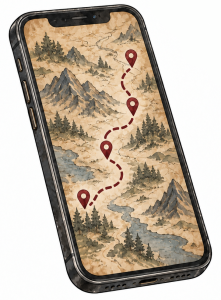
Preview: Hotel Elliott • Liberty Theatre • Fort Stevens State Park • Highway 101 / Oregon Route 22 Haunted Roads • Lafayette Pioneer Cemetery • Argyle Winery / Spirithouse • Portland Underground • White Eagle Saloon & Hotel
Check In to Hotel Elliott
357 12th St, Astoria, OR
Begin your escape with an overnight stay at Hotel Elliott, a restored historic hotel in downtown Astoria. Built in 1924 during the years following the devastating 1922 fire that destroyed much of Astoria’s business district, the hotel was developed by Charles Niemi and operated by the Elliott family. Today, the boutique hotel combines its 1920s character with modern accommodations, historic architectural details, and rooftop views over the city and Columbia River.
Hotel Elliott has accumulated enough ghost stories to inspire a guest logbook devoted to paranormal encounters. Visitors and employees have reported transparent apparitions moving through the lobby, including figures believed to resemble former residents of the building. Other accounts describe an elderly man walking through a locked door, phantom voices in empty rooms, the sounds of unseen children, and the unsettling sensation of someone sitting on a bed or touching a sleeping guest. Room 307 has developed a particularly haunted reputation, with reports of mysterious tapping, sudden cold spots, gentle touches, and beds shaking without explanation.
If possible, request Room 307 for an especially eerie overnight stay. After checking in, explore the hotel’s historic spaces, ask about its paranormal guest logbook, and enjoy the views from the rooftop terrace if accessible.
Spend the Evening at Liberty Theatre
1203 Commercial St, Astoria, OR
Step inside Astoria’s historic Liberty Theatre, a beautifully restored performance venue that opened in 1925, just three years after the same devastating fire that reshaped the city’s downtown and led to the construction of Hotel Elliott. Designed in the Italian Renaissance style, the theater welcomed generations of audiences for movies, vaudeville, concerts, and live performances. Its ornate auditorium, decorative plasterwork, and grand architectural details preserve the glamour of an earlier era, while its long history has also given rise to stories of visitors who may never have left.
The theater’s best-known ghost is Handsome Paul, an elegantly dressed gentleman said to enjoy attending performances long after his death. His apparition has reportedly appeared near the stage and among the seats, while unexplained disturbances around concession equipment have also been attributed to him. Other accounts describe doors opening or closing on their own, mysterious sounds in empty rooms, apparitions in the women’s restroom, and the unsettling sensation of having one’s hair pulled by an unseen hand.
Check the Liberty Theatre’s event calendar and, if possible, arrange your visit around an evening performance or special event. Settle into the historic auditorium and imagine Handsome Paul watching the show somewhere among the audience. If no performance is scheduled, inquire about tours or other opportunities to see the interior before returning to Hotel Elliott for the night.
The Next Morning: Explore Fort Stevens State Park
100 Peter Iredale Rd, Hammond, OR
Leave Astoria early and drive west toward Fort Stevens State Park, where windswept beaches, coastal forests, abandoned military fortifications, and the rusting remains of a shipwreck create one of the eeriest landscapes on the Oregon Coast. Established during the Civil War to defend the mouth of the Columbia River, Fort Stevens remained an active military installation through World War II. In June 1942, a Japanese submarine fired shells toward the fort, making it the site of one of the few enemy attacks on the continental United States during the war.
Among the park’s most atmospheric landmarks is Battery Russell, an abandoned concrete gun battery surrounded by coastal forest. Its dark chambers, empty gun emplacements, and weathered stairways have become associated with stories of soldiers who reportedly remain at their posts long after the fort’s military service ended. Visitors have described apparitions wearing 1940s uniforms, footsteps echoing through empty rooms, shadowy figures moving among the trees, and an oppressive feeling near the old fortifications.
A short drive away, the skeletal remains of the Peter Iredale rise from the sand along the Pacific shoreline. The four-masted steel sailing ship ran aground in 1906 while attempting to enter the Columbia River, and more than a century of saltwater, storms, and shifting sand has reduced it to a rusting framework. Against a backdrop of crashing waves and gray coastal skies, the wreck looks like something abandoned by time itself.
Begin at Battery Russell, exploring the accessible concrete chambers and surrounding grounds before continuing to the Peter Iredale shipwreck. Allow approximately 90 minutes for both locations, with additional time if you want to visit the park’s military museum area. Check current access and museum hours before your trip, and be mindful of slippery surfaces and changing coastal conditions.
Eerie Photo Op: At the Peter Iredale shipwreck, photograph the rusting ribs of the vessel against the Pacific Ocean. Position yourself to capture the twisted metal rising from the sand, with waves and an overcast sky in the background. A little coastal fog makes the scene even more atmospheric.
Share your trip photographs: #EerieEscapesOregon
Follow Oregon’s Haunted Highways
From Fort Stevens, head south along Highway 101, where the Pacific Ocean, towering evergreens, and winding coastal roads provide the setting for two of Oregon’s strangest roadside legends. The first is the Bandage Man, a grotesque figure said to haunt the stretch of highway near Cannon Beach and Arch Cape. Described as a decaying man wrapped from head to toe in bloody, foul-smelling bandages, he is sometimes believed to be the restless spirit of a logger or sawmill worker who died in a terrible industrial accident.
According to local stories, the Bandage Man appears suddenly along dark stretches of road, pounds on car windows, and sometimes leaps into the beds of passing pickup trucks. One popular version of the legend tells of a driver who heard something moving in the back of his truck, only to discover bloody bandages scattered across the bed after the mysterious passenger disappeared. Other accounts describe the figure approaching parked cars or emerging from the trees before vanishing into the coastal fog.
Farther inland, Oregon Route 22 has a frightening roadside apparition of its own. Along the stretch between Hebo and Happy Hollow, travelers have reported encountering the Broken-Neck Lady, a womanlike figure with gray hair, twisted arms, and a head hanging at an unnatural angle. She is said to appear beside the road or among the trees, sometimes startling drivers who catch sight of her in their headlights before she disappears.
Follow Highway 101 south through the Cannon Beach and Arch Cape area, then continue toward Hebo and take Oregon Route 22 inland through the countryside associated with the Broken-Neck Lady. Enjoy the coastal scenery, but pay attention to the wooded shoulders and the occasional deserted stretch of highway. This portion of the escape is as much about the journey as the destination, with two of Oregon’s most unsettling legends accompanying you toward wine country.
Afternoon: Visit Lafayette Pioneer Cemetery
Ferry St, Lafayette, OR
Continue into Oregon’s Willamette Valley to Lafayette Pioneer Cemetery, a quiet nineteenth-century burial ground surrounded by farmland and towering fir trees. Weathered headstones, old family plots, and moss-covered monuments mark the resting places of some of the region’s earliest settlers. But the cemetery is best known for a much darker story: the legend of a woman accused of witchcraft who supposedly cursed the town before her death.
According to local folklore, the woman was condemned as a witch and hanged, but before dying, she declared that Lafayette would suffer for what had been done to her. Some versions claim she promised that the town would burn three times, while others tell of a curse that would bring misfortune to anyone who disturbed her grave. The details vary considerably, and there is little historical evidence to support the story, but the legend has become one of Oregon’s most enduring tales of witchcraft and supernatural revenge.
Visitors have reported glimpsing a mysterious woman moving among the graves, hearing strange laughter or disembodied voices, and experiencing sudden chills or the sensation of being watched. Some accounts describe an apparition disappearing between the headstones, while others tell of unexplained unease near the cemetery’s oldest graves. Whether these encounters are supernatural or simply the product of an isolated setting and a powerful local legend, the cemetery has earned a reputation as one of Oregon’s most haunted burial grounds.
Spend approximately 30 minutes exploring the cemetery’s older sections, taking time to read the historic markers and appreciate the quiet landscape. Remember that this is an active place of remembrance, so remain on established paths, respect the graves, and visit only during permitted hours. As you walk beneath the fir trees, consider the story of the woman whose supposed final words have haunted Lafayette for generations.
Taste the Spirits at Argyle Winery
691 OR-99W, Dundee, OR
A short drive from Lafayette brings you to Argyle Winery in Dundee, where Oregon’s celebrated wine country offers an unexpectedly haunted stop. Among the buildings on the winery’s historic property is the Spirithouse, a small home built in 1906 that once belonged to the Imus family. The building later served as Dundee City Hall before becoming Argyle’s original tasting room. Its unusual name is more than a playful reference to wine, however. The house is said to be haunted by a young woman who died within its walls more than a century ago.
Lena Elsie Imus was just 25 years old when she died in the house in 1908. According to local accounts, her spirit never entirely departed. Winery employees have reported the scent of perfume or flowers drifting through empty rooms, footsteps crossing the upstairs floor when no one is there, and lights switching on and off without explanation. One of the property’s stranger stories involves the unmistakable sound of wine glasses shattering, only for staff to discover that nothing has broken. Rather than shy away from its ghostly reputation, Argyle embraced the legend, naming its Spirithouse Pinot Noir and Chardonnay in Lena’s honor.
Reserve a wine tasting at Argyle and ask about the historic Spirithouse and the wines named for its resident ghost. Allow approximately an hour to enjoy the tasting and explore the winery’s accessible spaces before continuing to Portland. If available, try one of the Spirithouse wines and raise a glass to Lena, whose name has become part of the winery’s history more than a century after her death.
Evening: Descend into the Portland Underground
120 NW 3rd Ave, Portland, OR
Continue north to Portland’s historic Old Town and Chinatown district, where a network of basements, sidewalk vaults, and underground passageways has inspired one of the city’s darkest legends. Known as the Portland Underground or Shanghai Tunnels, these spaces date to the city’s nineteenth-century waterfront era, when Portland was a bustling port filled with sailors, saloons, boardinghouses, and businesses catering to the maritime trade. The passages served practical purposes, including storing and moving goods, but their history has become entangled with stories of kidnapping, forced labor, and people disappearing beneath the streets.
According to the most sensational versions of the legend, unsuspecting men were drugged or trapped inside waterfront saloons, then transported through underground tunnels to ships waiting along the Willamette River. Once aboard, they were forced to work as sailors, sometimes for years before returning home. The practice of shanghaiing was a genuine problem in nineteenth-century port cities, but historians have questioned whether Portland’s underground passages were used for the elaborate kidnapping operations described in popular tours and local folklore. The tunnels’ reputation nevertheless endures, blending documented waterfront history with generations of increasingly sinister stories.
The underground spaces have also developed a haunted reputation. Tour guides and visitors have reported disembodied whispers, footsteps echoing through empty passages, sudden cold spots, and the sensation of being touched by someone unseen. Shadowy figures are said to move through the darkness, while some accounts describe an overwhelming feeling of unease in the narrow rooms and passageways beneath the city. Even without a supernatural encounter, descending below the busy streets into dimly lit chambers can feel like stepping into an entirely different Portland.
Reserve an evening guided tour of the Portland Underground, preferably one that includes the historic spaces beneath the former Merchant Hotel. Tours typically involve uneven surfaces, stairways, and low lighting, so wear comfortable shoes and confirm the meeting location, duration, and current schedule when booking. If an underground tour is unavailable, choose an evening walking tour of Old Town and Chinatown that explores Portland’s waterfront history, shanghaiing legends, and reported hauntings.
Finish the Escape at White Eagle Saloon & Hotel
836 N Russell St, Portland, OR
Finish your Oregon escape at the White Eagle Saloon & Hotel, one of Portland’s most famously haunted establishments. Opened in 1905 by Polish immigrants in the city’s Albina neighborhood, the White Eagle became a gathering place for sailors, dockworkers, and laborers drawn to the nearby waterfront. Its rough-and-rowdy reputation earned it the nickname “Bucket of Blood,” while stories of violent brawls, an upstairs brothel, a basement opium den, and possible connections to Portland’s shanghaiing trade became part of the building’s colorful and sometimes difficult-to-verify history. Today, the historic saloon and hotel are operated by McMenamins, preserving the building’s old-fashioned atmosphere, live music, and reputation for restless spirits.
Among the White Eagle’s best-known ghosts is Rose, believed to have been a sex worker associated with the building’s early years. Her apparition is said to appear near the upstairs rooms, while guests have reported mysterious touches, footsteps, and doors opening or closing on their own. Another resident spirit is Sam, a longtime cook and hotel resident whose presence has reportedly been felt around the building. A third ghost, sometimes described as a former bouncer, is associated with the basement, where visitors and employees have reported shadowy figures, whispers, and the unsettling feeling that someone is standing nearby. Other accounts include unexplained voices, sudden cold spots, and movement in otherwise empty rooms.
Settle in for dinner and drinks in the historic saloon, where dark wood, vintage furnishings, and live music create a fitting atmosphere for the final stop of the day. If you would rather spend the night in Portland than return to Astoria, consider reserving one of the White Eagle’s upstairs guest rooms for a second haunted overnight. Otherwise, enjoy a final drink and raise a glass to the ghosts, monsters, and mysterious figures encountered along Oregon’s haunted highways.
Scare Challenge: After dark, use your phone or a dedicated EVP recorder to capture a few minutes of audio in the hotel’s publicly accessible areas, where recording is permitted. Pause in a quiet spot and ask one or two questions, such as “Is anyone here?” or “What is your name?” Remain silent for 13 seconds before ending the recording. Later, listen with headphones for whispers, footsteps, knocks, or other sounds you didn’t notice at the time. Be respectful of other guests, and avoid recording private conversations.
Darker Stories: Local Crime and Legends
True Crime Story: The D. B. Cooper Mystery
On November 24, 1971, a man calling himself Dan Cooper boarded Northwest Orient Flight 305 in Portland, carrying a briefcase and wearing a dark business suit. During the short flight to Seattle, he informed a flight attendant that he had a bomb and demanded $200,000 and four parachutes. After landing in Seattle, Cooper exchanged the passengers for the ransom and parachutes, then ordered the plane back into the air. Somewhere over the forests of the Pacific Northwest, he lowered the rear staircase of the Boeing 727 and parachuted into the stormy night with the money. Neither Cooper nor his parachute was ever found. In 1980, a young boy discovered $5,800 of the ransom money buried along the Columbia River, but the discovery only deepened the mystery.
More than half a century later, investigators may still have clues to uncover. In May 2026, researchers published a new forensic analysis of Cooper’s clip-on tie, which he left aboard the plane. Using advanced microscopy, they examined approximately 180,000 microscopic particles and identified traces of specialized metals and industrial materials that could offer clues about his occupation or geographic history. The research has not identified Cooper, but it raises the possibility that an ordinary black necktie could someday help solve one of America’s most extraordinary unsolved crimes.
Local Legend: Colossal Claude
At the mouth of the Columbia River, where powerful currents collide with the Pacific Ocean and fog can swallow entire ships from view, Oregon has its own mysterious sea monster. Known as Colossal Claude, the creature was reportedly spotted in the waters near Astoria and along the Oregon Coast, particularly during the mid-twentieth century. Witnesses described an enormous serpentlike animal with a long neck, a head resembling that of a horse or camel, and a body that sometimes appeared smooth, scaly, or covered in fur. Some claimed to see the creature swimming near fishing boats, while others watched an enormous shape rise from the water before disappearing beneath the waves.
Reports of Colossal Claude became especially prominent during the 1950s, although stories of unidentified marine creatures had circulated along the Oregon Coast for decades. Some observers suggested that the sightings involved whales, seals, or other familiar animals distorted by distance and rough seas. Others believed something much larger and stranger inhabited the deep waters off the coast. Sightings largely faded by the early 1960s, but the legend survived, becoming part of the region’s maritime folklore. Along a coastline famous for shipwrecks, dangerous currents, and sudden storms, it is easy to imagine something enormous moving unseen beneath the gray Pacific waters.
Until the Next Escape
I hope you’ve enjoyed coming along on this Micro Eerie Escape and feel inspired to take the trip yourself. Follow the entire itinerary or choose the stops that intrigue you most, then make the adventure your own. Until the next escape, may you find strange stories, atmospheric places, and just enough unease to follow you home.