Climb aboard — a journey into the unknown awaits you…
There’s something undeniably romantic about rail travel. The glow of station lights at night, the steady rhythm of the tracks, the unhurried pace of the journey, and the way terminals fill and empty with a constant flow of strangers. Each arrival and departure carries the possibility of a chance encounter or a quiet, fleeting connection. For more than a century, America’s great train stations have welcomed travelers setting out on adventures, reunions, and new beginnings. Some of the most historic stations have also developed reputations as America’s most haunted train stations, where ghost stories have become part of the station’s atmosphere.
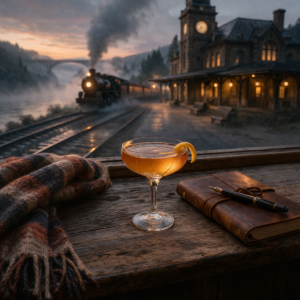
Across the country, historic rail terminals have quietly gathered ghostly legends, tales of distant whistles in the night, voices drifting through corridors long after the last train has departed, and the occasional glimpse of a lone figure forever trapped in time, waiting on a platform for the friend or lover who never arrived.
In this guide, we’ll visit some of the most haunted train stations in America, from grand Midwestern terminals to historic depots of the American West and the vast concourses of New York City. Along the way, you’ll discover the ghost stories tied to these remarkable buildings and some of the history that may have given rise to them.
And if the idea of traveling between haunted stations by rail sounds too good to resist, there’s good news: a short haunted rail journey through the Midwest still connects several of these stops. Later in the guide, you’ll find a four-day itinerary linking the ghostly stations of Kansas City, St. Louis, Chicago, and Cincinnati by train.
So settle into your seat, watch the landscape slip past the window, and keep an eye on the reflection in the glass. Sometimes, in places where so many people have come and gone, a few remain behind.
👻 Win an Eerie Escapes Box
Enter the monthly giveaway for a chance to win a curated box of travel-inspired and spooky finds.
Kansas City, Missouri
Union Station
Kansas City’s Union Station opened in 1914 and quickly became one of the busiest transportation hubs in the country, handling hundreds of trains and tens of thousands of passengers each day. The Beaux-Arts building was designed to impress, with a grand waiting hall, massive chandeliers, and sweeping arches that still greet visitors today. Though rail traffic declined in the late twentieth century, the station remains an active Amtrak stop and has been restored as a cultural and entertainment center.
The station’s long history may also explain why some believe it is haunted. In 1933, it was the site of a violent massacre, later named the Kansas City Massacre, when gangsters attempted to free a federal prisoner just outside the building, resulting in a chaotic gunfight that left several law enforcement officers and the fugitive dead. Some visitors and staff have speculated that this tragedy left an imprint on the station. Employees and security guards have reported hearing unexplained footsteps echoing through empty tunnels and service corridors beneath the building, as well as sudden cold spots and the distinct feeling of being watched late at night. Others claim to hear distant voices or movement in areas that are otherwise sealed or vacant, adding to the station’s reputation as one of Kansas City’s more quietly eerie historic landmarks.
St. Louis, Missouri
St. Louis Union Station
When St. Louis Union Station opened in 1894, it was the largest and busiest passenger rail terminal in the world. Designed by architect Theodore Link, the grand Romanesque station welcomed travelers beneath its towering clock tower and into a vast Grand Hall lined with sweeping arches, stained glass windows, and soaring ceilings. At its peak, more than one hundred thousand passengers passed through the station daily as trains arrived from across the country. Today, the building has been carefully restored as a hotel and entertainment complex, but the dramatic architecture and historic spaces still evoke the golden age of American rail travel.
Over the years, the station gained a reputation for lingering spirits. One of the most frequently mentioned figures is known as the “Lady in White,” said to be the ghost of a young woman who once waited at the station for a fiancé who never returned. Guests and staff occasionally report seeing a pale figure in period clothing moving quietly through the Grand Hall before disappearing. Others claim the station may still be watched over by the Harvey Girls, two waitresses who once worked at the Harvey House restaurant serving rail passengers during the station’s busiest decades. Visitors have described fleeting glimpses of women in vintage uniforms in areas that once housed the bustling dining rooms of the station’s railroad era.
Chicago, Illinois
Chicago Union Station
Chicago Union Station opened in 1925 and quickly became one of the most important rail hubs in the United States. Built in the Beaux-Arts style, the station’s enormous Great Hall is defined by its soaring coffered ceiling, massive marble columns, and tall arched windows that flood the space with natural light. For generations of travelers arriving in the Midwest, Union Station served as a dramatic gateway to the city, linking Chicago with rail lines stretching across the country. Even today, it remains one of Amtrak’s busiest stations, with trains departing daily beneath the historic platforms that run along the Chicago River.
With such a long and eventful history, it’s perhaps no surprise that the station has developed a reputation for unexplained activity. Some stories connect the station’s eerie atmosphere to the aftermath of the nearby 1915 Eastland disaster, when the excursion ship SS Eastland capsized in the Chicago River just a short distance from the site of today’s station, killing more than 800 people. Buildings along the riverfront were used during the grim recovery effort, and over the years workers have reported strange sounds and unsettling sensations in quiet corridors near the tracks. Others claim to have glimpsed a lone figure in early-twentieth-century clothing waiting on a platform long after the last train has departed, only for the figure to vanish moments later into the vast station.
Cincinnati, Ohio
Cincinnati Union Terminal
Cincinnati Union Terminal opened in 1933 and remains one of the most striking railroad stations in the United States. Designed in a bold Art Deco style, the building is defined by its massive half-dome facade and the enormous rotunda inside, where colorful murals and sweeping curves once welcomed thousands of rail passengers each day. At the height of passenger rail travel, trains arrived beneath the station through a network of underground tracks and concourses that stretched far beyond the main hall. Though long-distance rail service eventually declined, the terminal has been preserved as the Cincinnati Museum Center, allowing visitors to explore the historic building while still arriving by Amtrak just behind the station itself.
Over the years, the station has developed a quiet reputation for unexplained activity, much of it connected to a story often referred to as the “security guard ghost.” According to local accounts, a security guard was murdered at the building in 1989, and some employees believe his presence still lingers in the station after hours. Staff and visitors have reported hearing doors rattle or the sound of someone methodically checking locks late at night, as if a guard were making rounds through the building. Others describe footsteps echoing in otherwise empty corridors or the uneasy sensation of someone moving through the vast underground areas beneath the terminal. Whether these stories arise from imagination, coincidence, or something more mysterious, the station’s immense scale, quiet nighttime atmosphere, and layered history continue to reinforce its reputation as one of Cincinnati’s more quietly haunted landmarks.
Phoenix, Arizona
Phoenix Union Station
Phoenix Union Station opened in 1923 and was the city’s primary rail gateway, serving several major railroads as Arizona grew rapidly in the early twentieth century. Built in a Mission Revival style with distinctive stucco walls and arched windows, the station welcomed passengers traveling across the Southwest and played a central role in connecting Phoenix to the national rail network. Passenger service ended in the 1990s, but the historic depot still stands today and has been preserved as an office and event space, allowing visitors to see one of the region’s most significant railroad landmarks.
Though quieter today than during its busy rail years, the building has developed a modest but persistent haunted reputation. Workers and security staff have occasionally reported unexplained noises late at night, such as doors closing, footsteps echoing through empty corridors, or objects shifting when no one is nearby. One of the most commonly repeated stories involves a woman said to appear in the station’s waiting room after dark, dressed in clothing from the early decades of rail travel. Witnesses have described seeing her seated quietly on a bench as if waiting for a train, only for the figure to vanish when approached, leaving the room empty once again.
Galveston, Texas
Galveston Union Station (Railroad Museum)
Galveston’s historic Union Station opened in 1913 as part of the Gulf, Colorado and Santa Fe Railway and served as a key gateway to the Texas coast during the golden age of American rail travel. The station welcomed travelers arriving by train to board ships departing from the busy port nearby, making it an important transportation link between inland rail routes and maritime trade. To reach the island, trains crossed Galveston Bay on a long rail causeway from the mainland, an unforgettable arrival that carried passengers directly over open water before rolling into the seaside terminal. Though passenger service eventually declined, the building was preserved and today houses the Galveston Railroad Museum, where visitors can explore historic railcars, locomotives, and the restored terminal itself.
Over the years, the station and surrounding rail yard have developed one of the more unusual haunted reputations among American railroad sites. One of the most commonly repeated stories involves the sound of a phantom train—visitors have reported hearing whistles or the distant rumble of railcars pulling into the station late at night, only to find the tracks completely empty. Others speak of a headless railroad worker seen moving along the rails or between parked train cars before disappearing into the darkness. Some locals also connect the station’s eerie atmosphere to the aftermath of the 1900 Galveston hurricane, when rail lines played a crucial role in bringing relief supplies and transporting survivors and victims off the devastated island. Because trains and rail yards became central to the massive recovery effort, some believe the lingering echoes of that tragedy may still be felt among the quiet platforms and historic railcars today.
🔦👻 Download the Free Haunted America Explorer Bundle!
Six free printable downloads, including a haunted America map, locations guide, checklist, and more to help you explore America’s eeriest places.
Salt Lake City, Utah
Rio Grande Depot
The Rio Grande Depot opened in 1910 as the grand passenger terminal for the Denver & Rio Grande Railroad, serving travelers arriving in Salt Lake City during a time when railroads were rapidly expanding across the American West. Designed in an ornate Renaissance Revival style, the depot stood apart from the city’s other stations and welcomed passengers traveling through the Rocky Mountains on some of the most scenic rail routes in the country. Though passenger service eventually shifted elsewhere, the building has been carefully preserved and now houses the Utah State Historical Society, keeping the historic station open to visitors.
Like many early twentieth-century railroad depots, the building has gathered its share of ghost stories over the years. One of the most persistent legends centers on the depot’s basement, where a railroad worker is said to have died in the early years of the station’s operation. Staff and security personnel have occasionally reported hearing footsteps in the lower corridors or sensing someone moving through the basement when no one else is present, with some claiming to have briefly seen a man in railroad-era clothing before he disappears from view. Visitors have also described figures dressed in period clothing appearing near staircases or hallways before vanishing moments later. Some believe these experiences may be tied to the depot’s long history as a busy transportation hub, when travelers, railroad workers, and immigrants passed through its halls in great numbers.
New York City
Grand Central Terminal
Grand Central Terminal opened in 1913 and remains one of the most famous train stations in the world. Designed in the Beaux-Arts style, the terminal is known for its vast Main Concourse, iconic celestial ceiling painted with constellations, and sweeping marble staircases that frame the central information booth and clock. At its peak, the terminal served as the gateway to New York for long-distance travelers arriving from across the country. Though most intercity rail traffic has since shifted to Pennsylvania Station, Grand Central continues to serve hundreds of thousands of commuters each day, preserving its role as one of the city’s busiest and most recognizable landmarks.
The terminal’s long history and immense scale have given rise to a wide range of ghost stories, many centered in its quieter, less-traveled spaces. Employees working late-night shifts have occasionally reported seeing what appears to be a lone passenger in early-twentieth-century clothing standing near the edges of platforms or along passageways, as if waiting for a train that never arrives—only for the figure to disappear moments later when approached. Other stories point to the terminal’s hidden corners, including sealed tunnels and long-rumored spaces such as Track 61, a secret platform built beneath the station that once allowed discreet arrivals directly into the Waldorf Astoria Hotel. Workers in the lower levels have described hearing unexplained footsteps, distant voices, or movement in areas that are rarely used today. While no single tragedy defines its haunted reputation, Grand Central’s decades as a bustling gateway, handling millions of arrivals, departures, and the occasional accidents and untold personal stories that came with them, have led some to believe that remnants of the past still linger. In a place built to move vast numbers of people through time and space, it is perhaps not surprising that a few seem reluctant to leave.
A Haunted Train Journey Between Some of the Most Haunted Train Stations in America
If the idea of haunted train stations has you itching to travel by rail, this itinerary offers a way to experience several of them on a single journey. This four-day route links together four historic stations across the Midwest, beginning in Kansas City and ending in Cincinnati, with stops along some of the most storied rail corridors in the country. At each stop, we’ve also included an optional overnight stay at a nearby haunted hotel so you can continue the eerie experience after leaving the station.
Along the way you will pass through grand halls, historic platforms, and stations that have witnessed more than a century of arrivals and departures. When the crowds thin and the last trains of the evening have come and gone, these buildings often feel at their most atmospheric.
One important detail to keep in mind is that the final leg of the journey, from Chicago to Cincinnati, is served by the Amtrak Cardinal, which only runs three times per week. Be sure to check the current schedule when planning your trip so your travel days align with the train’s departures.
Day 1 — Kansas City, Missouri
Union Station
Begin your journey in Kansas City at the grand Union Station, one of the Midwest’s most beautiful surviving rail terminals. Spend time exploring the enormous waiting hall, where chandeliers glow above marble floors and echoes carry easily through the cavernous space.
If you visit in the evening, the station takes on an especially atmospheric character once crowds thin and the surrounding platforms grow quiet.
Overnight suggestion:
Savoy Hotel Kansas City — one of the city’s oldest hotels and long associated with sightings of a mysterious young girl.
Day 2 — St. Louis, Missouri
St. Louis Union Station
Board the morning train east and follow the historic rail corridor along the Missouri River to St. Louis. After arriving at Gateway Transportation Center, it’s about a 10-minute walk or short ride share to St. Louis Union Station.
The vast former terminal now houses attractions and a hotel, but the building’s immense train shed and ornate Grand Hall still preserve the feeling of a nineteenth-century rail gateway.
Overnight suggestion:
St. Louis Union Station Hotel — located inside the historic station itself.
Day 3 — Chicago, Illinois
Chicago Union Station
Continue north to Chicago, where trains still arrive beneath the monumental halls of Chicago Union Station. The station’s Great Hall, with its towering columns and skylit ceiling, is one of the most recognizable railroad interiors in the United States.
Overnight suggestion:
Congress Plaza Hotel — a historic Chicago hotel long associated with unexplained activity and ghost sightings.
Day 4 — Cincinnati, Ohio
Cincinnati Union Terminal
Your final stop lies southeast of Chicago in Cincinnati, reached aboard the Amtrak Cardinal. Because this train operates only a few days each week, planning ahead is essential when organizing the final leg of the journey.
The train arrives at Cincinnati Union Terminal, one of the most visually striking railroad stations in America.
Overnight suggestion:
Hilton Cincinnati Netherland Plaza — a grand Art Deco hotel in downtown Cincinnati where guests and staff have reported sightings of the mysterious “Lady in Green,” said to wander the halls in search of her long-lost husband.
Get Ready for Your Haunted Rail Journey
1. Watch a Train Mystery
Few settings create suspense quite like a train. Before your journey begins, consider watching Strangers on a Train, Alfred Hitchcock’s classic thriller about two strangers whose chance meeting aboard a train leads to a chilling crime plot. The film captures the tense, atmospheric feeling of travel by rail, making it a perfect way to set the mood before visiting America’s historic and haunted stations.
2. Pack a Book
Before setting out on your own rail adventure, consider packing a book that celebrates the romance of train travel. 100 Train Journeys of a Lifetime: The World’s Ultimate Rides by Everett Potter highlights some of the most spectacular railway routes across the globe, from alpine crossings in Switzerland to scenic rides through the Rockies. Flipping through its pages is a perfect way to build excitement for your own journey between America’s historic and haunted stations.
3. Toast Your Trip
Before setting off, raise a glass to the journey ahead with a classic Sidecar cocktail. Popular during the golden age of travel in the early twentieth century, the drink became a staple in elegant hotel and station bars where rail passengers gathered before departure. The cocktail’s unusual name is often said to come from a motorcycle sidecar used by an American army officer in Paris during World War I, who supposedly rode to his favorite bar in the attached carriage. Made with cognac, orange liqueur, and fresh lemon juice, the Sidecar is both bright and sophisticated, a fitting toast to the romance of train travel.
Sidecar Recipe
2 oz cognac
1 oz orange liqueur (such as Cointreau or triple sec)
¾ oz fresh lemon juice
Shake with ice and strain into a chilled coupe glass. Garnish with a twist of lemon.
Closing Thought
Train stations have always been places of movement. People arrive, people depart, and thousands of stories pass quietly through their halls every day. Yet some places seem to hold on to the past a little more tightly than others.
Whether you visit these stations out of curiosity, a love of rail history, or the hope of experiencing something unexplained, each one offers a glimpse into an earlier era of travel. Beneath their soaring ceilings and along their quiet platforms, the echoes of the past never feel very far away.
🕯️ Love exploring the eerie? Join the Eerie Dispatches newsletter for atmospheric, cozy-creepy, immersive stories about horror and true crime topics. We’re drawn to the mysterious, the unexplained, and the darkly fascinating. Come explore with us.